

NSW TAFE Certificate III: A Complete Guide to Vocational Training in New South Wales
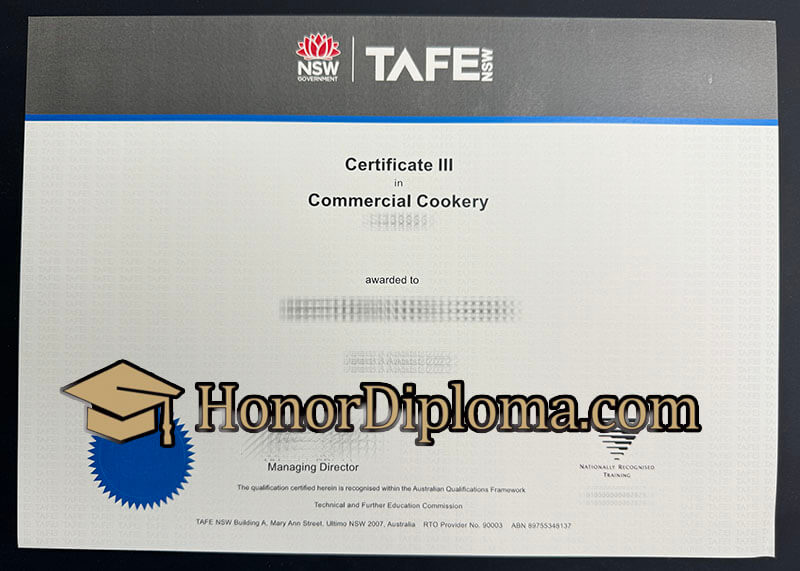
A NSW TAFE Certificate III is a nationally recognised vocational qualification that provides students with practical skills and industry-relevant knowledge. Make a NSW TAFE Certificate III replica. Where to order NSW TAFE Certificate III? In New South Wales, TAFE NSW is one of the largest providers of vocational education and training, offering Certificate III courses across a wide range of industries.
For students looking to develop practical skills, enter the workforce, or continue to higher-level vocational study, a Certificate III can be an important step toward a professional career.
What Is a NSW TAFE Certificate III?
A Certificate III is an Australian Qualifications Framework (AQF) Level 3 qualification. It generally focuses on developing practical workplace skills while also providing students with foundational theoretical knowledge.
Certificate III programs can be found in many industries, including:
- Business and administration
- Information technology
- Hospitality and cookery
- Automotive
- Construction
- Community services
- Early childhood education
- Health
- Beauty
- Engineering
- Electrotechnology
- Retail
The exact course structure, duration, entry requirements, and assessment methods depend on the individual qualification.
What Can You Study at TAFE NSW?
TAFE NSW provides vocational education programs designed around Australian industry needs. Certificate III courses can combine classroom learning with practical training, workshops, simulated workplaces, or work placements.
Popular Certificate III qualifications may include programs related to:
Certificate III in Business
Business-related training can help students develop skills in administration, customer service, workplace communication, and general office operations.
Certificate III in Early Childhood Education and Care
This qualification is designed for people interested in working with children in early childhood settings. Students learn about supporting children’s development, health, safety, and wellbeing.
Certificate III in Individual Support
This type of qualification can prepare students for entry-level roles supporting people who require assistance in community or care environments.
Certificate III in Hospitality
Hospitality programs can provide practical skills for restaurants, cafés, hotels, catering businesses, and other hospitality environments.
Certificate III in Information Technology
IT-focused Certificate III programs can introduce students to fundamental technical, digital, networking, and support skills.
How Long Does a Certificate III Take?
The duration of a NSW TAFE Certificate III varies significantly depending on the qualification and study arrangement.
Some programs can be completed relatively quickly, while others require longer periods because they include extensive practical training or work placement.
Students should check the specific TAFE NSW course information for the latest duration, delivery method, campus locations, and commencement dates.
Entry Requirements
Entry requirements depend on the individual Certificate III course.
Some programs have relatively straightforward entry requirements, while others may require:
- Previous education
- English-language skills
- Mathematics or other prerequisite knowledge
- A working-with-children or other industry-related clearance
- Work placement requirements
- Additional practical requirements
International students may have additional admission requirements depending on their course and visa circumstances.
Assessment Methods
TAFE Certificate III courses generally emphasize practical competency rather than traditional examinations alone.
Assessment can include:
- Practical demonstrations
- Written assignments
- Projects
- Workplace activities
- Knowledge assessments
- Observations by trainers
- Work placement assessments
This approach allows students to demonstrate that they can apply their knowledge in realistic workplace situations.
Career Opportunities After Certificate III
A Certificate III can provide a pathway into entry-level employment in the relevant industry. Career opportunities depend on the specific qualification completed.
Graduates may pursue positions such as:
- Administration assistant
- Hospitality worker
- Early childhood educator
- Support worker
- IT support trainee
- Retail worker
- Automotive service worker
- Skilled trade assistant
Some occupations may require additional registration, licensing, industry requirements, or further qualifications.
Certificate III as a Pathway to Further Study
A major advantage of vocational education is the opportunity to continue developing qualifications.
After completing a Certificate III, students may progress to a Certificate IV, Diploma, Advanced Diploma, or other relevant qualification. In some fields, vocational study can also contribute to longer-term pathways toward higher education.
This makes Certificate III particularly useful for students who want to build their education progressively while gaining practical skills.
Why Choose TAFE NSW?
TAFE NSW has a long history of providing vocational education and training throughout New South Wales. Its courses are designed around practical learning and industry needs.
Students may benefit from:
- Practical, career-focused education
- Experienced trainers
- Industry-relevant facilities
- Flexible study options for selected courses
- Work placement opportunities in applicable programs
- Pathways to further vocational education
NSW TAFE Certificate III vs. University Study
A Certificate III is different from a university degree. University programs generally emphasize academic and theoretical study, while Certificate III qualifications focus more heavily on practical workplace competencies.
For someone who wants to enter a particular occupation quickly, vocational education may provide a more direct route. Students who want a broader academic education or a professional career requiring a bachelor’s degree may instead consider university study.
Conclusion
A NSW TAFE Certificate III can be a valuable starting point for students seeking practical, industry-focused education. With programs available across areas such as business, hospitality, IT, healthcare, community services, trades, and childcare, Certificate III qualifications offer multiple pathways into employment and further study.
Before enrolling, prospective students should review the specific qualification carefully, including its course requirements, duration, delivery method, assessment structure, practical placement requirements, and career outcomes.